A letter
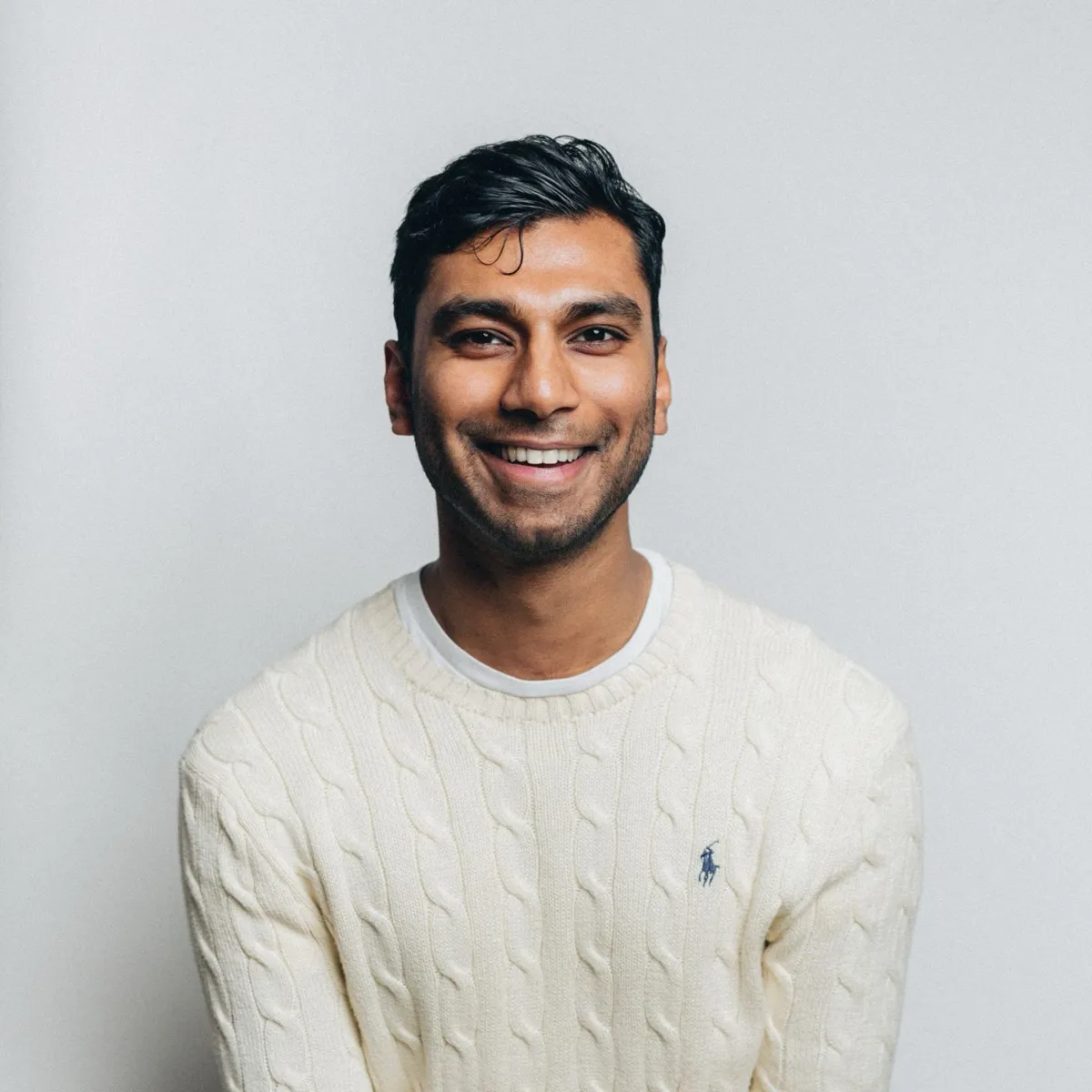
Before I wanted to be anything, I wanted to know what things were made of.
I grew up in Norway collecting stones. I wanted to know why they had the colours they had, why the sky was blue, why anything was the way it was. I was the kid with one more why than the adults had answers for.
Then I grew up, and I put it down.
Wanting to be someone
I studied history and politics in Hong Kong. I went into tech in 2019, partly because my brother had, and partly because I wanted to be known. To be recognised.
I started as an intern at Miquido, then became entrepreneur in residence at Mapify, then ran product operations at Donut. In 2021 I did product work for VitaDAO, a community funding longevity research. It was the first time I stood next to biology as an adult, and I didn’t know yet what that meant.
At ARIVE I became a growth product manager: acquisition, activation, retention. I learned that most of the job is listening, and that a product is only real once people use it without you in the room.
I was good at it. It always felt slightly off, like wearing someone else’s jacket.
Building my own
In 2023 I left ARIVE to start Feynman Studio and build something of my own. Since then I’ve built a range of products for a handful of clients, consulted on many more, and lately put AI at the core of most of it.
Along the way I co-founded Lemonsignal, which shows hiring teams how candidates actually work with AI, and Lobsite, which puts a website live in seconds.
The studio worked. The startups were harder. Years of building and pivoting taught me a lot, but the work I looked forward to most was never on the roadmap.
The plan had been to build a company, sell it, and use the money to do science someday. It took me too long to see that the plan was the thing keeping me from the science.
The question
Michael Levin was the catalyst. His lab shows that cells solve problems. Cut a flatworm into pieces and each piece rebuilds the whole animal, guided by electrical patterns that remember the shape it should be. It was the first time in years the work felt like mine.
More recently I found Richard Sutton and David Silver. Silver led AlphaZero, which learned chess and Go from nothing but the rules, by playing itself. They argue the next leap in AI will come from agents like that: learning from their own experience, not from everything we’ve already written.
Cells and agents are asking the same thing. How does something simple teach itself to become intelligent?
If we can build systems that really teach themselves, we can point them at problems we can’t solve alone, starting with biology and health. Levin reads cancer as cells losing track of the body’s plan. And maybe more exciting than any single answer: we’d understand how it works.
That’s the work at Feynman Labs: finding the connections between these fields. Agents that learn only from experience. Voltage in cancer cells, from open data. A model of a cell built to steer it, not just predict it.
What I bring
I turn half-formed ideas into working systems, fast. I’ve done it for seven years, in startups, a studio and my own companies, and lately with AI doing much of the heavy lifting.
That’s what new science needs. The distance between a result in a paper and something that helps a person is mostly building, and building is where I’m strongest.
I read the primary papers, run my own experiments, and keep deepening the maths underneath. I work between machine learning and biology, and I speak both.
To be continued
Someday: my own lab, close enough to walk or cycle to. Maybe a farm. And a small teaching job at a university, partly to find the clever people who’ll push the work further with me.
Until then I’ll keep building, and keep asking one more why.
If you work on any of this, or anywhere near it, write to me.